
null²
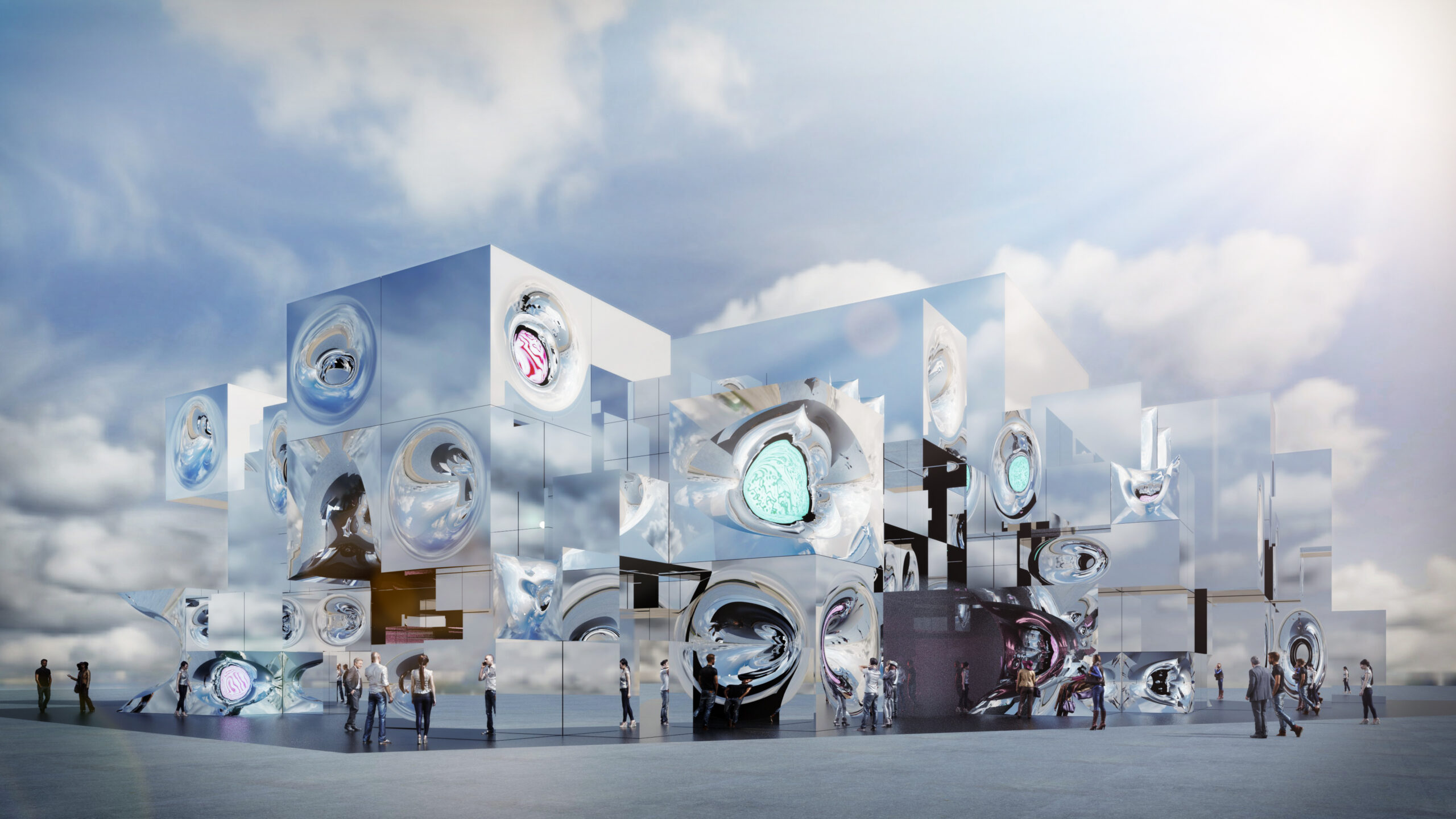
大阪・関西万博2025のシグネチャーパビリオンの一つであるnull²は、金属的で硬質な印象と、柔らかく可変的な性質が共存する建築をデザインテーマとしています。
ネットワーク化が進み、価値観が多様化した現代において、わざわざ現地に足を運ぶことの価値を問い直し、本計画では、広く薄く体験を提供することに長けたバーチャル空間と、身体的で濃密な体験をもたらすフィジカル空間のそれぞれの特性を肯定したうえで、両者をつなぐ「接空間(Interspace)」としての建築の役割を考えました。
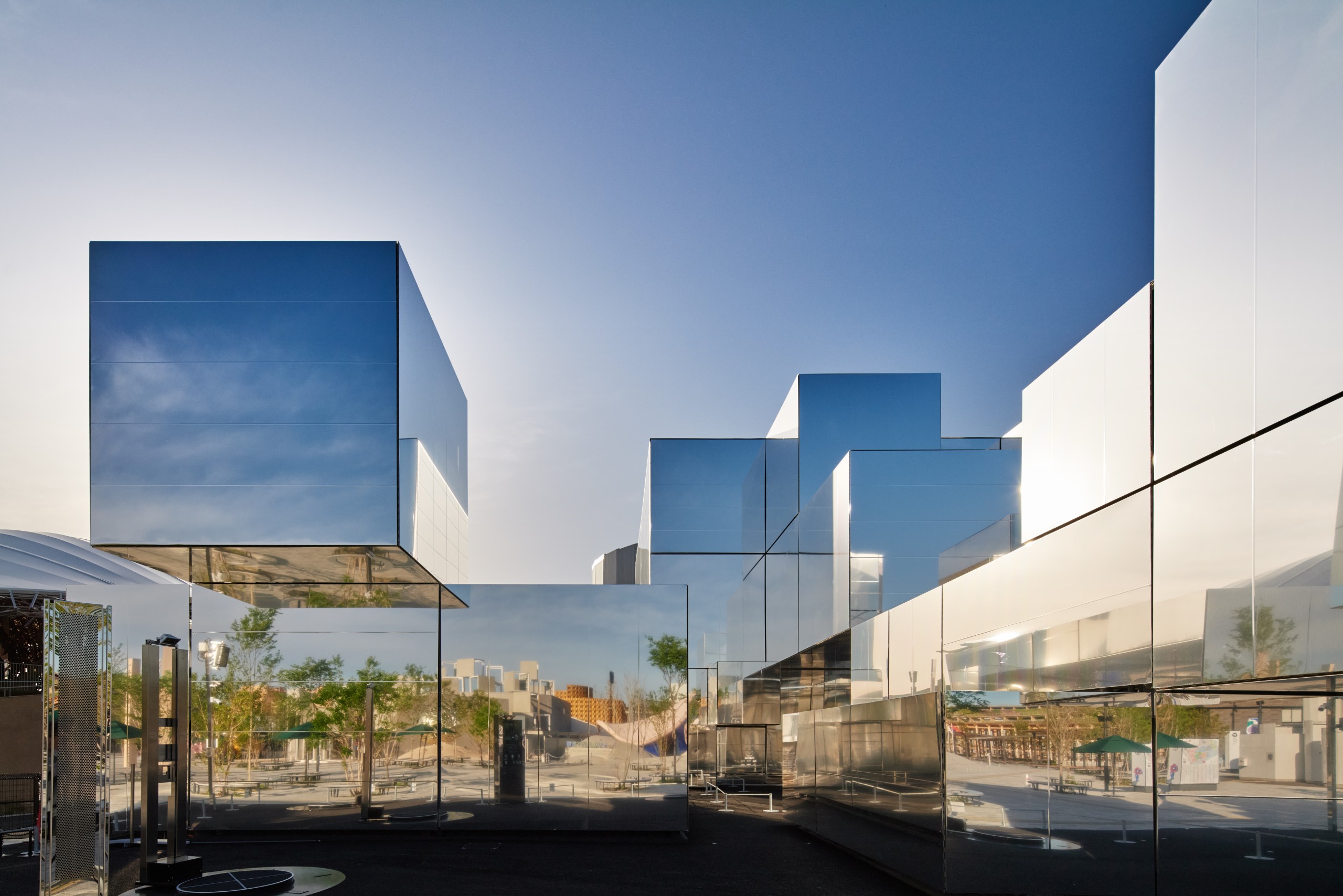
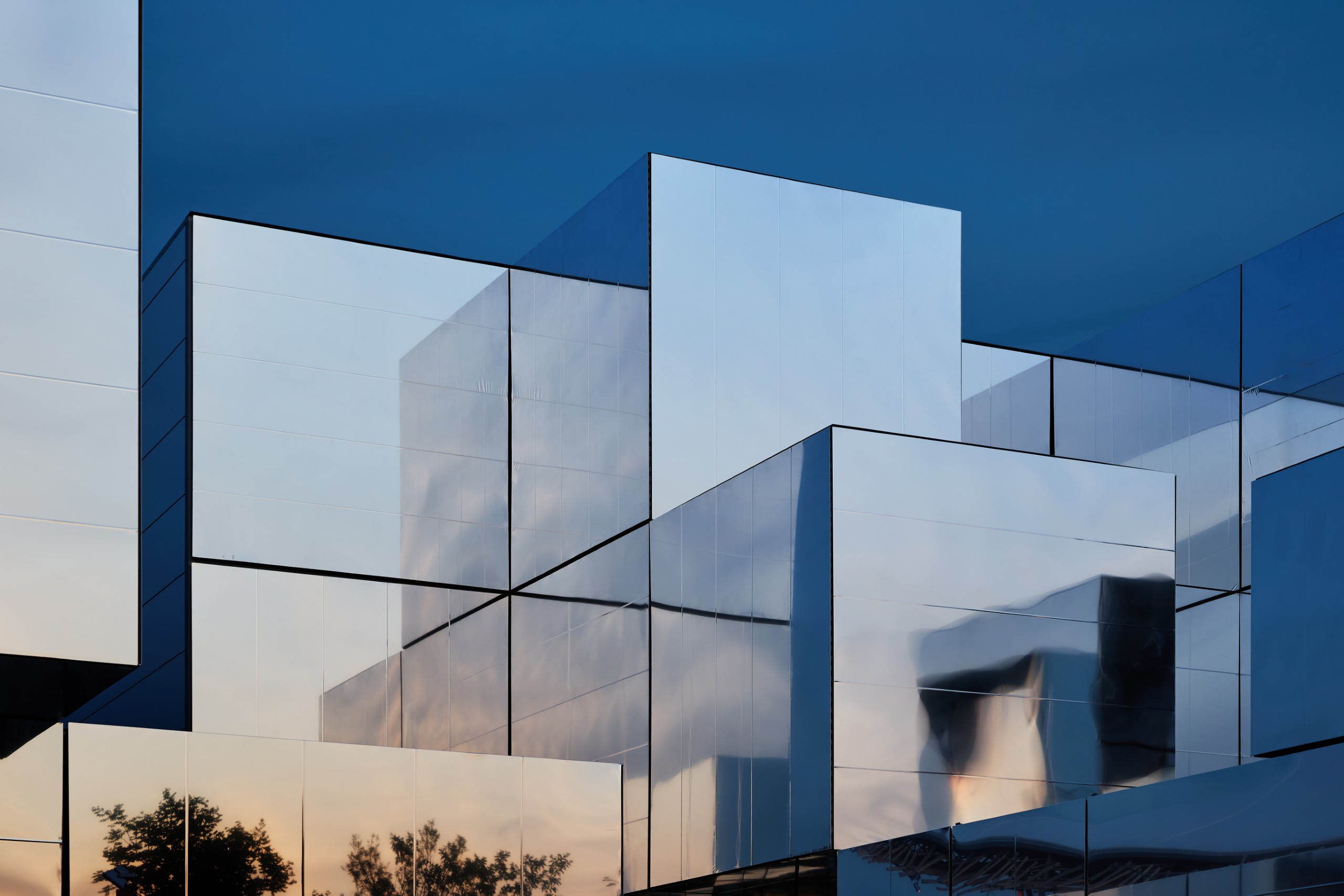
本パビリオンは、デジタル空間で用いられるボクセル(Voxel)という低解像度の空間単位を建築の構成要素としています。誰でも編集や再解釈が可能な構成とすることで、バーチャル空間上で自分なりのパビリオンをつくり、それをARなどを通して現地体験と重ね合わせるなど、多様な参加や二次利用を許容し、次世代の建築のあり方を探っています。設計者と利用者という従来の関係を超え、誰もが自分なりの関わり方で参加できる建築体験を目指しました。
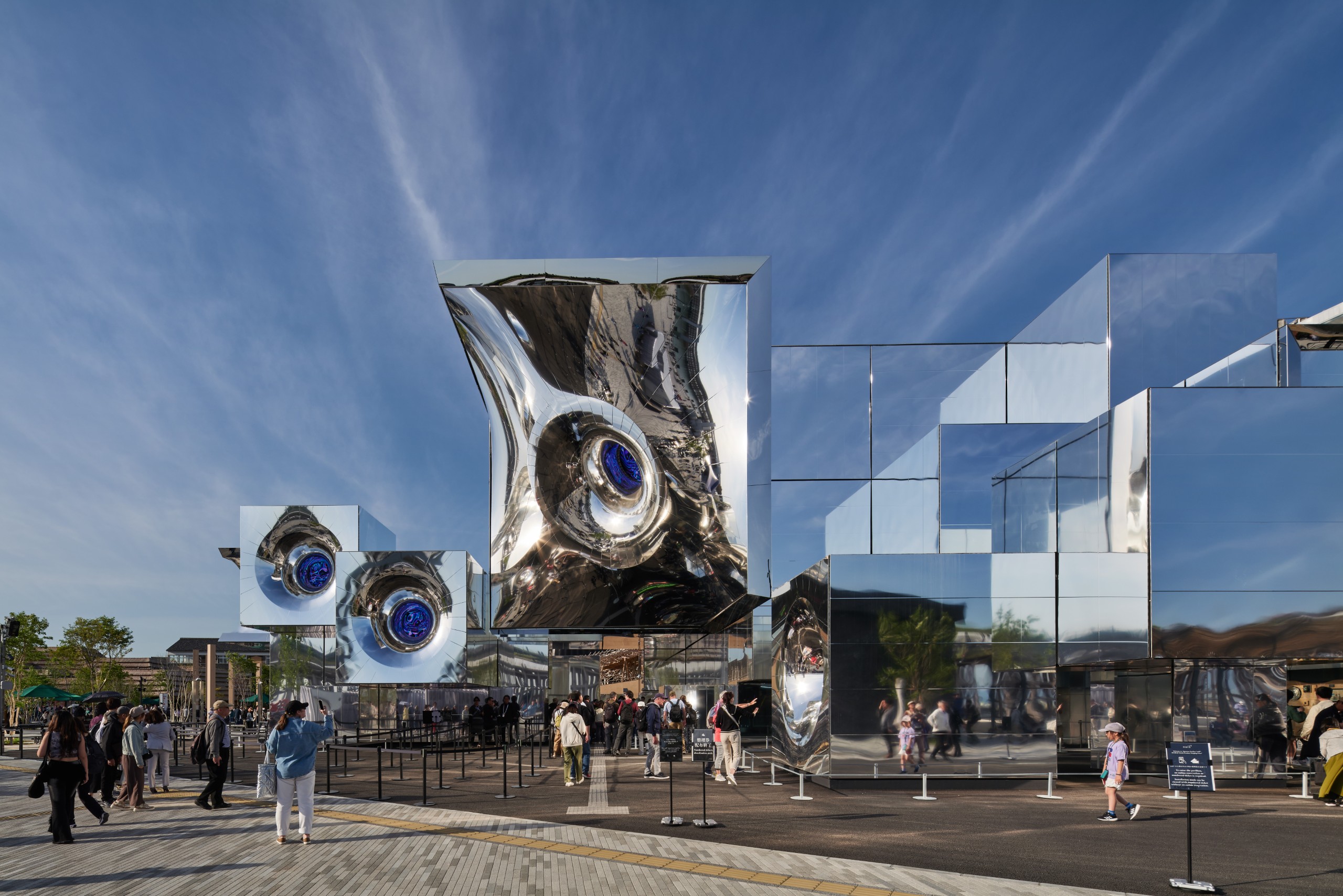
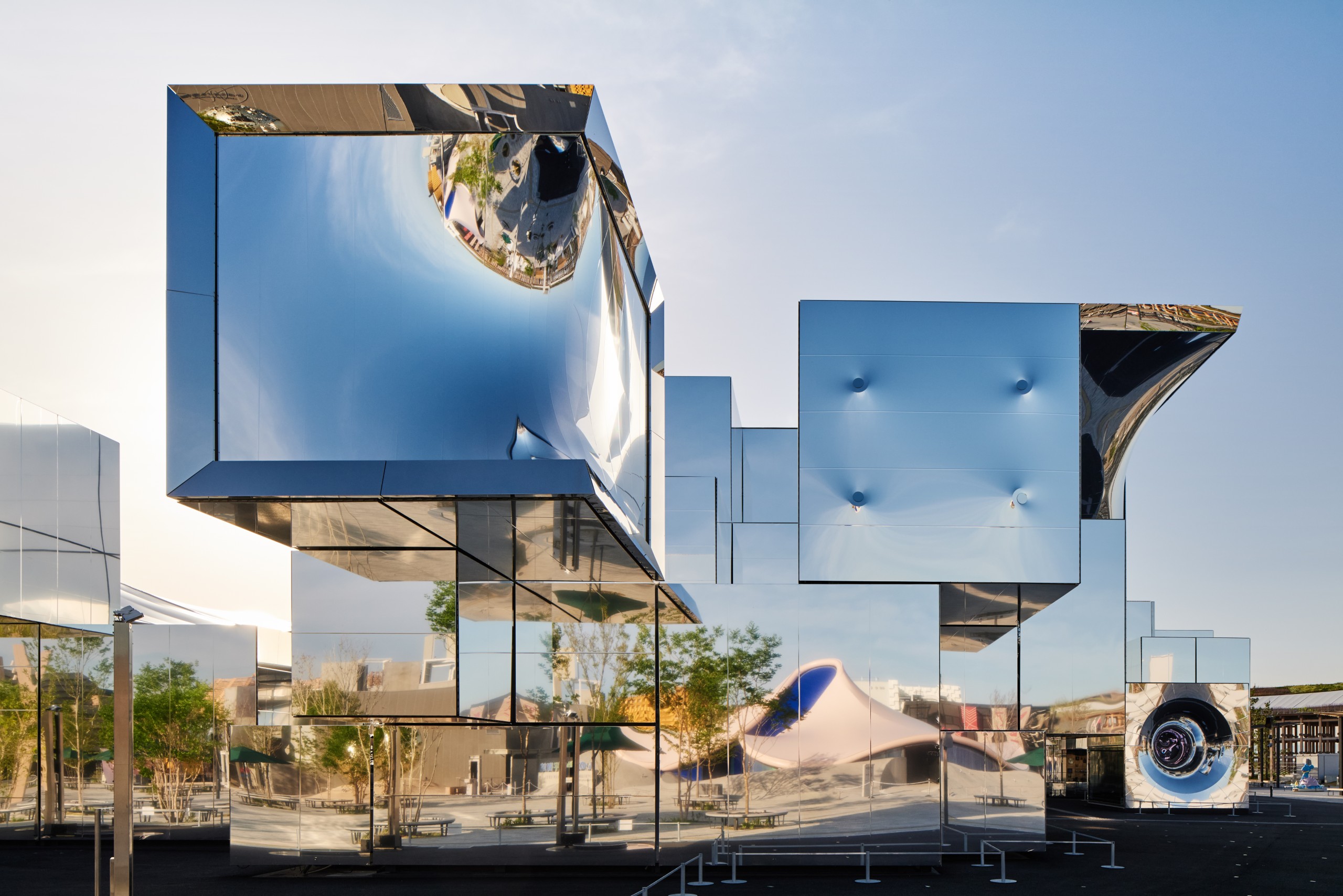
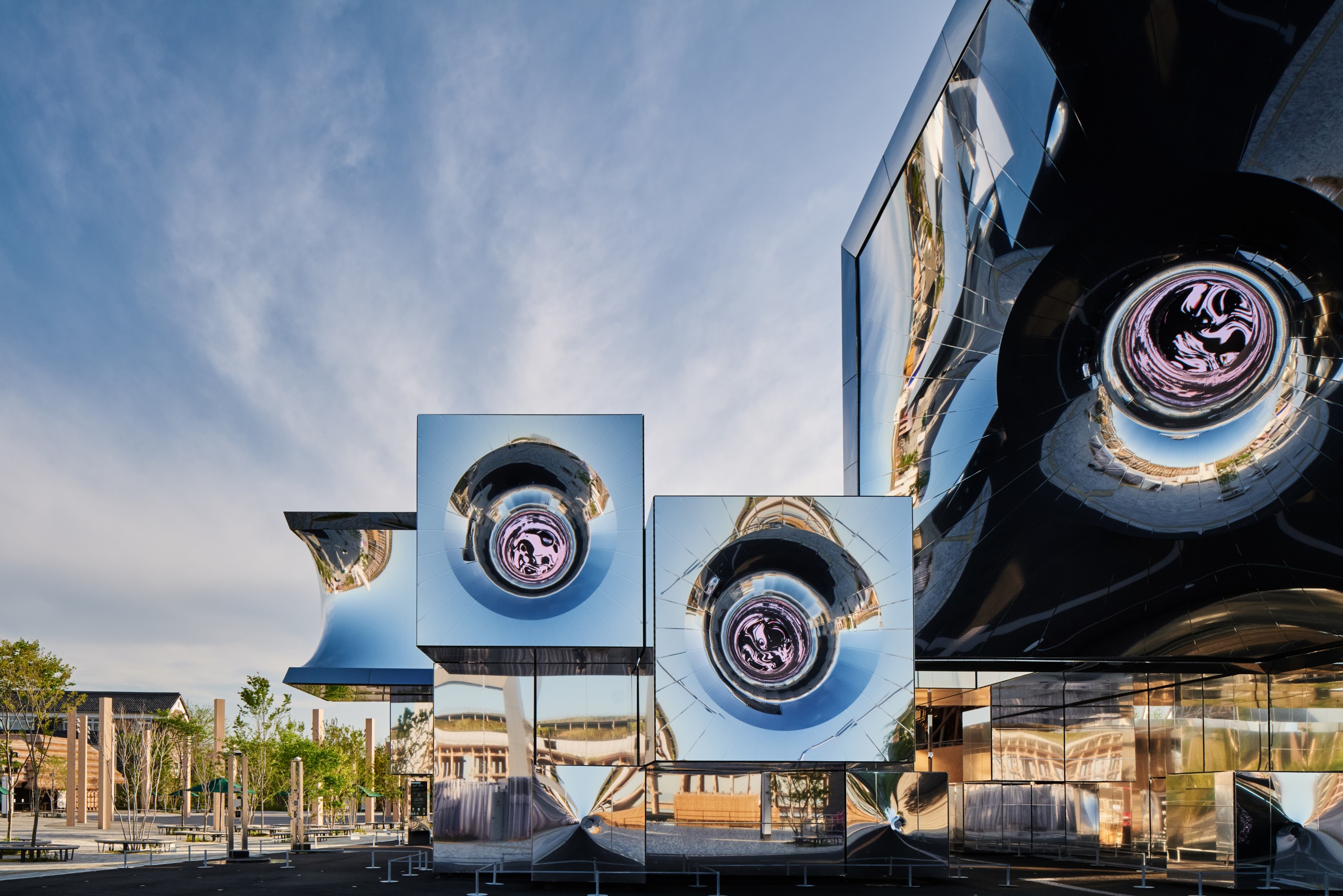
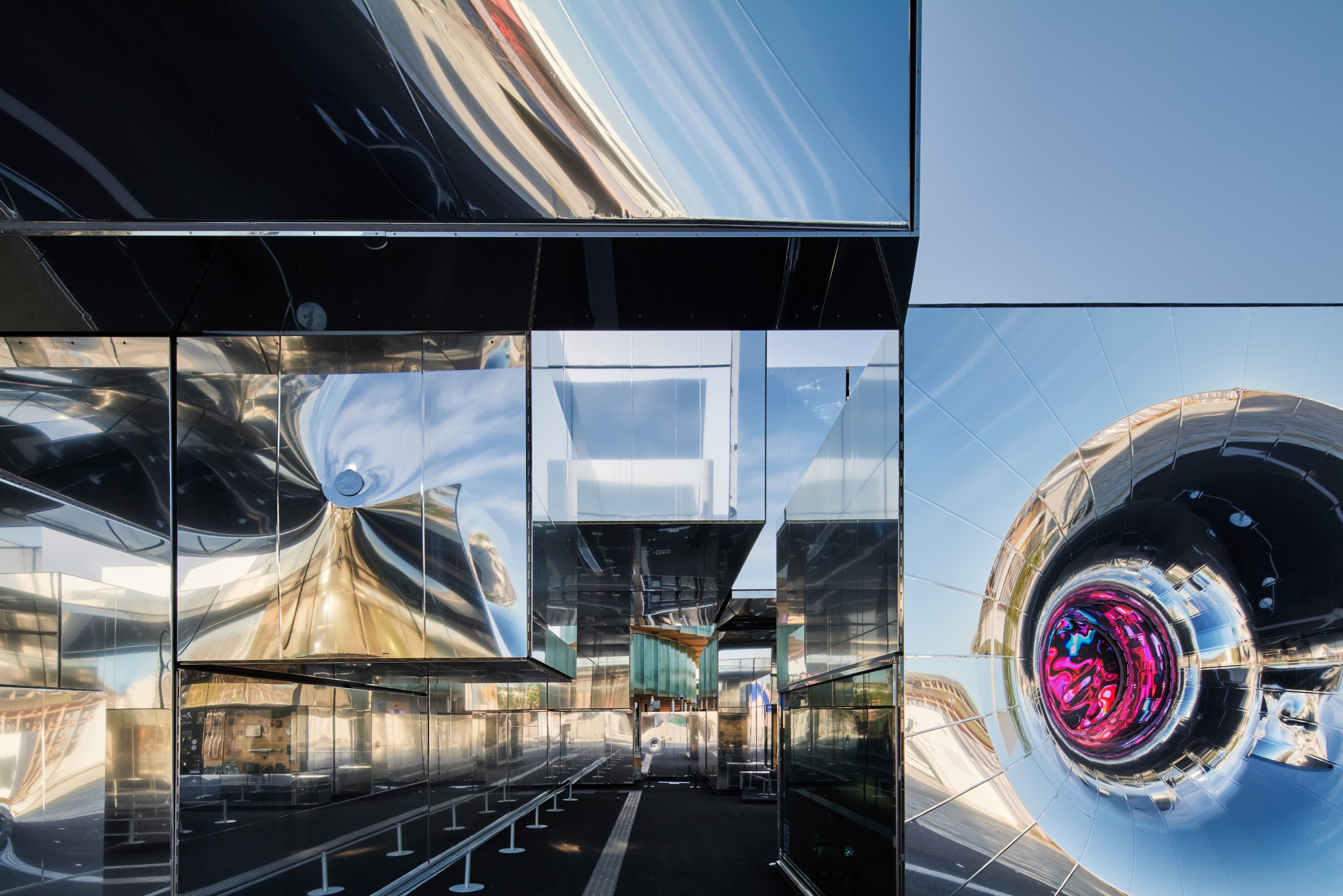
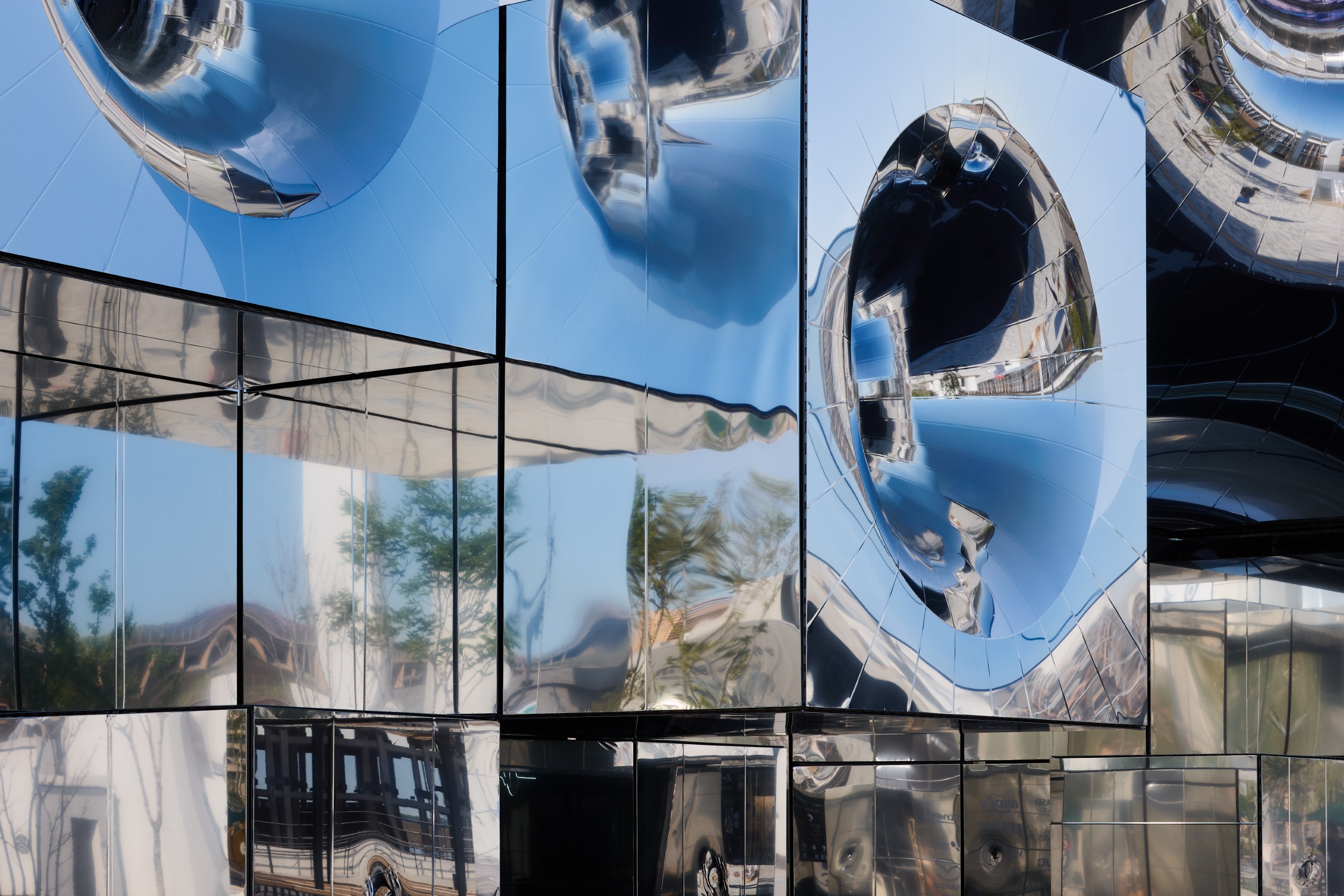
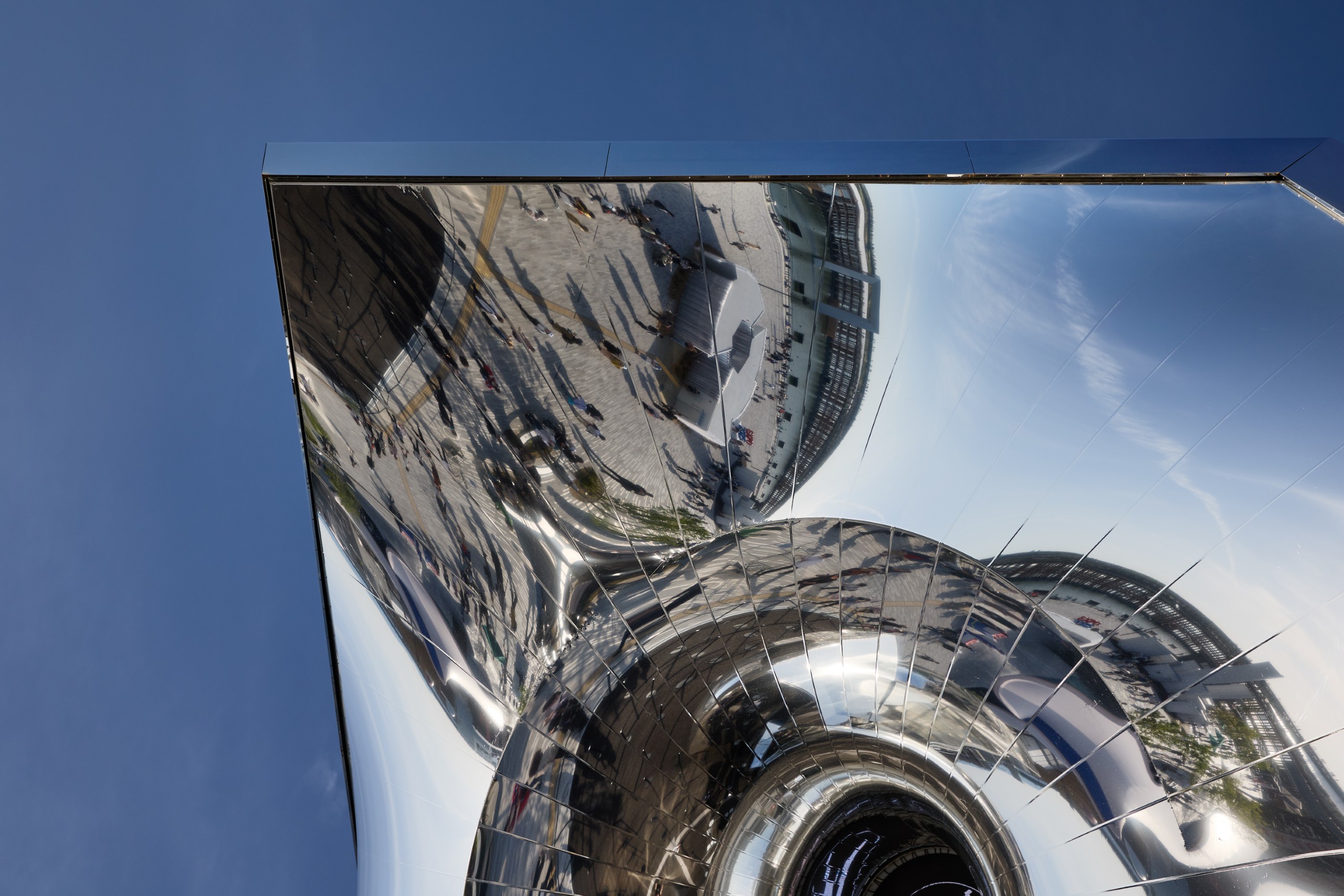
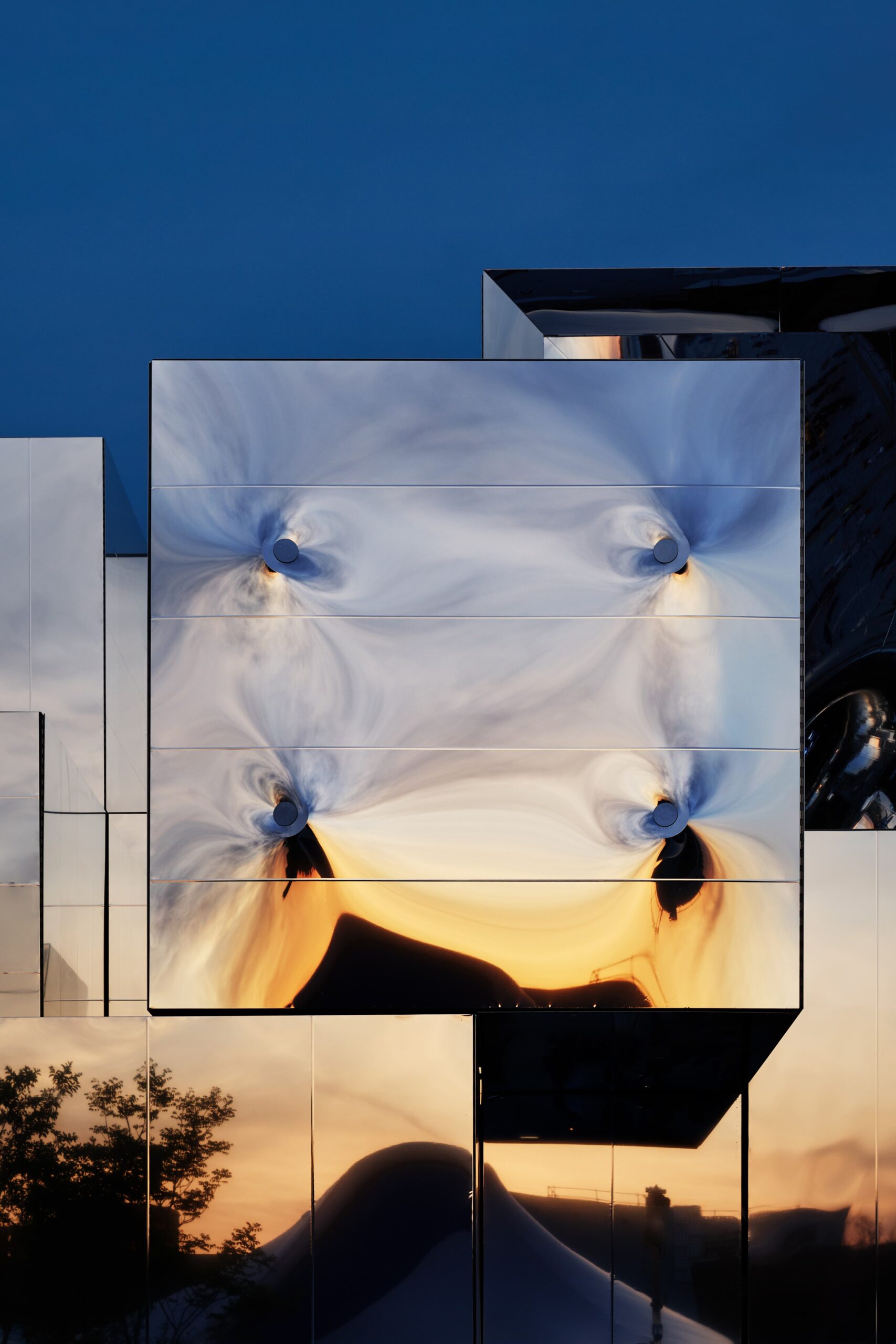
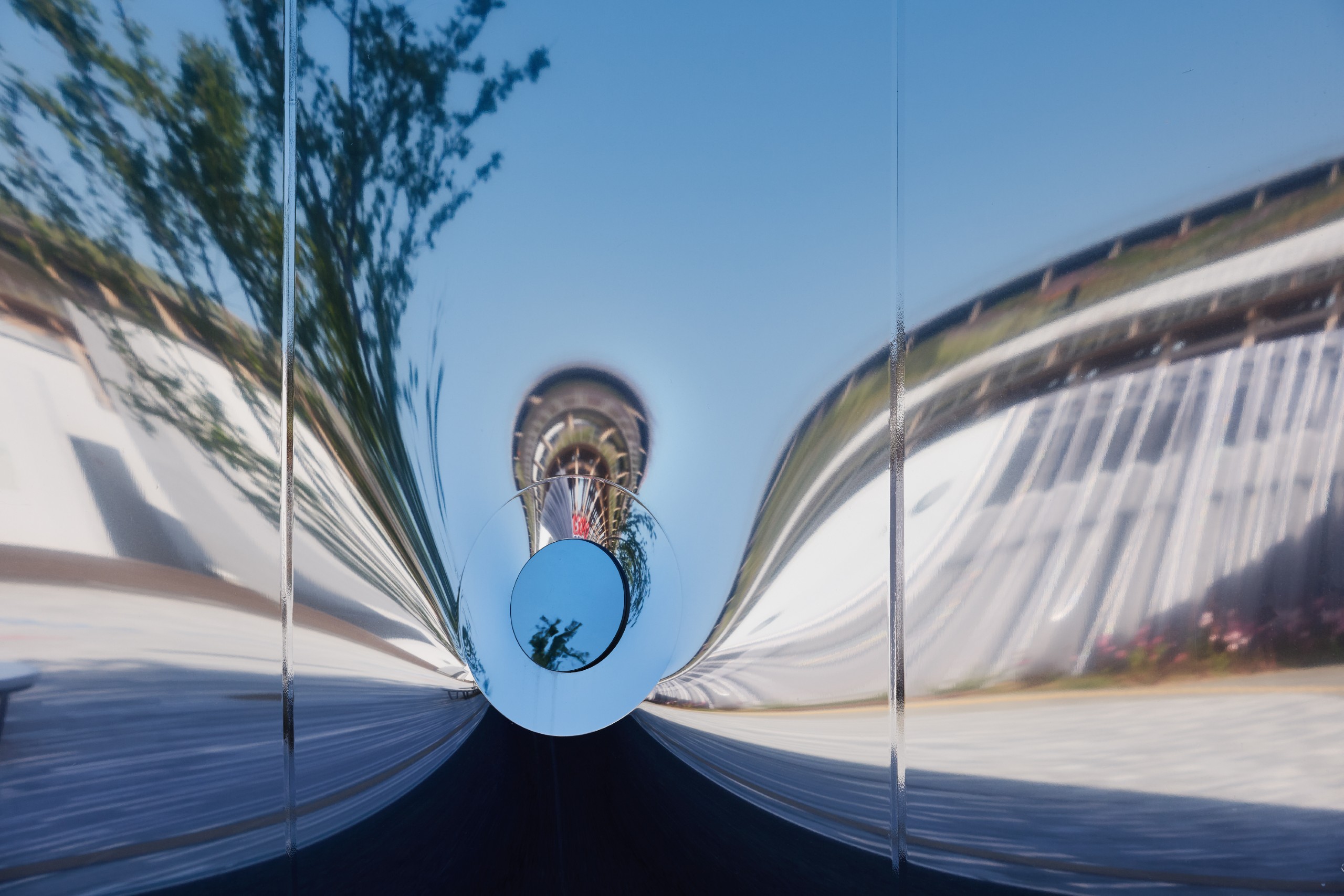
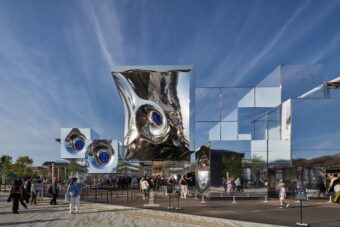
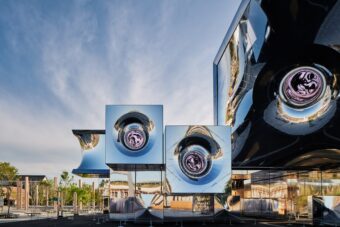
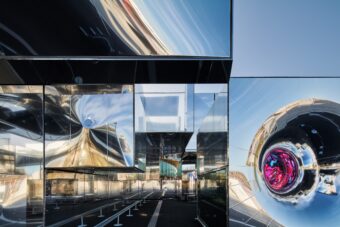
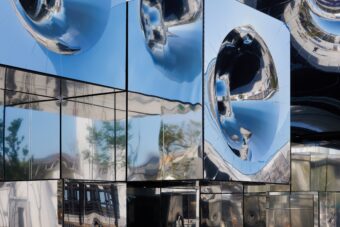
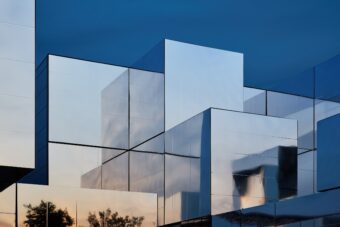
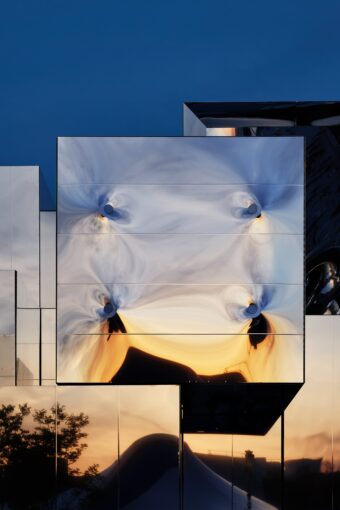
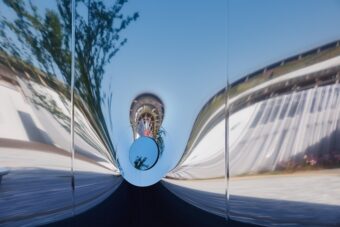
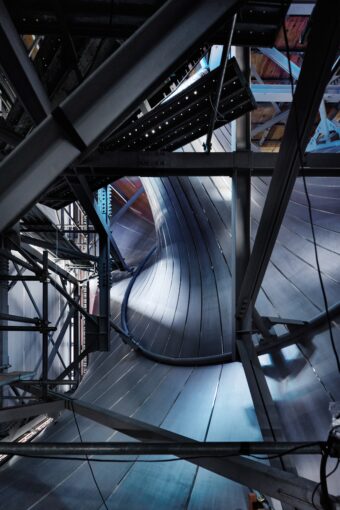
また、本計画では、より直接的な意味での「動的な建築」にも挑戦しています。フレームと可変性の高い膜による構成は、短期間での設計や条件変更、会期後の再利用にも柔軟に対応します。外装に用いた高反射の鏡面膜は、金属的な質感を持ちながら、風によって呼吸するように振動し、周囲の空や景観を歪ませながら映し出します。さらに、ウーファーやロボットアームによる制御によって膜面は文字通りヌルヌルと変化し、あたかも一個の生命体のように、周辺環境や人とインタラクションを行います。
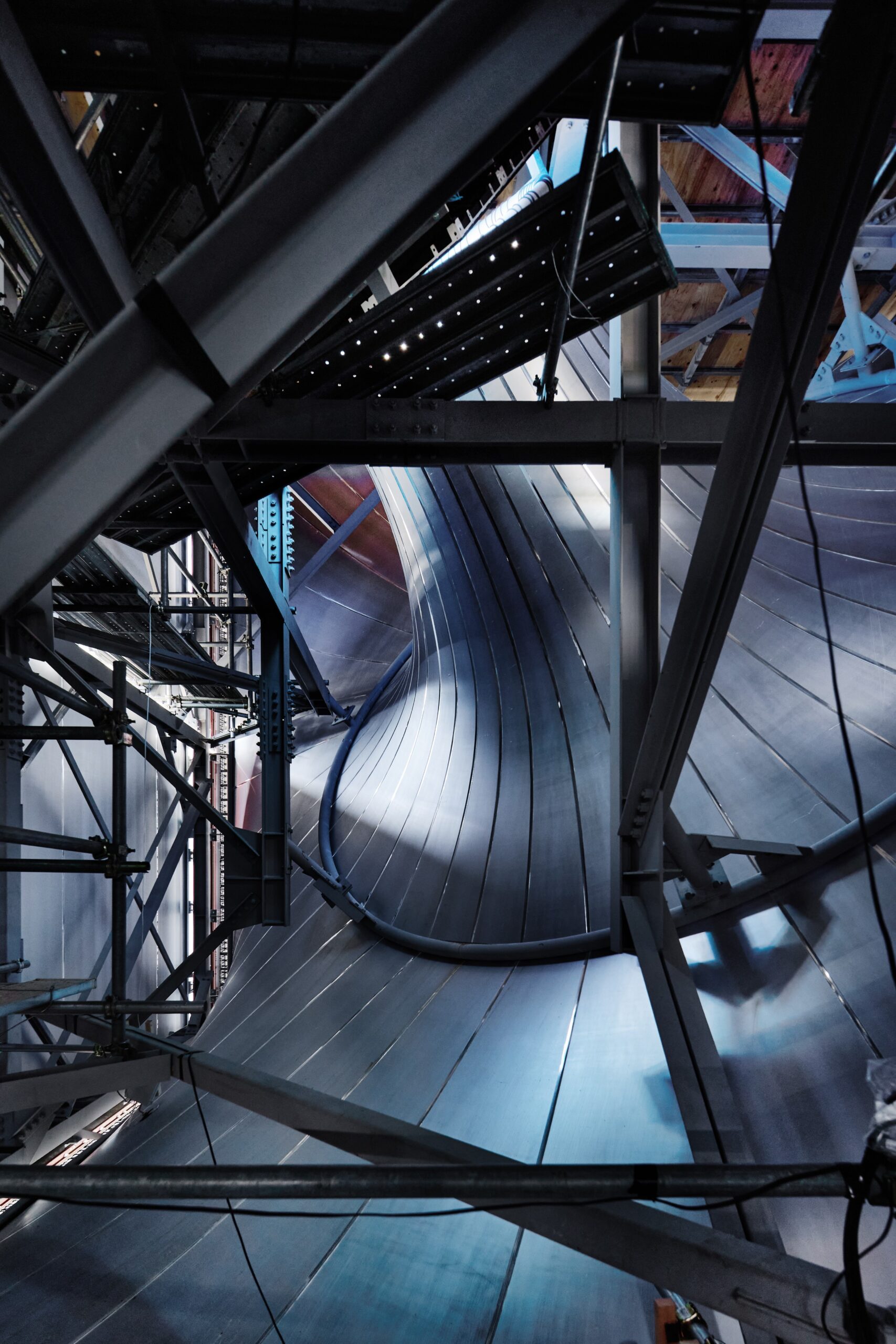
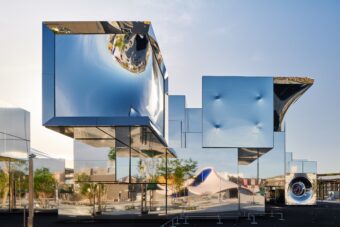
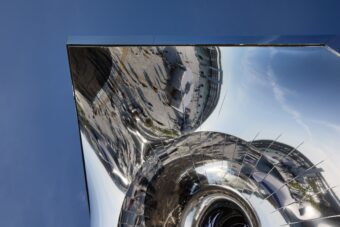
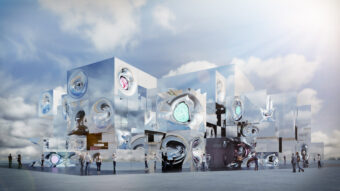
鞍型やホルン型の鏡面、そしてボクセルの立体的な構成が生み出す無数の鏡は、空中に浮かんだ多数の窓が異なる世界を切り取り、映し込み、重ね合わせているかのような効果を生み出し、パビリオン自体が無数のパラレルワールドが交錯する「接空間」として機能し始めます。物理世界とバーチャル世界、人とアバター、現実と異世界が重なり合う体験を通して、万博の本来のテーマである「異世界との出会い」を一貫して表現しています。
NOIZ took charge in the architectural design of “null²,” one of eight Signature Pavilions at Expo 2025 Osaka, produced by researcher/media artist Yoichi Ochiai. The Signature Pavilions have been planned as the thematic core of the current Expo, assigned to selected Japanese researchers and creators. The steel frame architecture is covered with metallic membranes which waver with the wind and reflect its surroundings, resembling a digital landscape in a futuristic physical world.
The pavilion’s name “null²” derives from both the programming term for an empty state and the Buddhist concept of “emptiness” (空). The squared symbol references the phrase “⾊即是空 空即是⾊” (form is emptiness, emptiness is form) from the Heart Sutra, where “emptiness” appears twice. This philosophical foundation underscores the pavilion’s exploration of boundaries between existence and non-existence, physical and digital.
From the very beginning of the design process, we considered the significant contrast of today’s Expo to the 1970’s Expo held in the same city of Osaka. The value of physically visiting a world expo has become questionable to many during the current internet age. Therefore, we set out to design a building that engages both the real and the digital realms and interact with its environment.
Our team translated that vision by coming up with a formation of voxels, in reference to a low-resolution method of expression in digital spaces such as games and VR. It is not only a type of digital landscape which helps reduce computational and communication loads while allowing for efficient dynamic description, but also a reminder of shared experiences in game environments.
Furthermore, this project explores the idea of “moveable architecture” in a direct sense. Normally, due to their scale and required performance, buildings tend to be static. However, given the short design timeline, expected budget adjustments, potential functional revisions, and even relocation after the Expo, we began with the premise of creating a highly adaptable structure using frames and mirrored membranes.
The exterior features a 98% reflective mirrored membrane – a new material developed in collaboration with Taiyo Kogyo and Ochiai’s production team. This membrane has a metallic texture and forms flexible curves. It is highly stretch-resistant, flexible, and possesses excellent solar reflectance, making it suitable for other uses beyond the Expo, such as improving insulation and aesthetics for existing buildings.
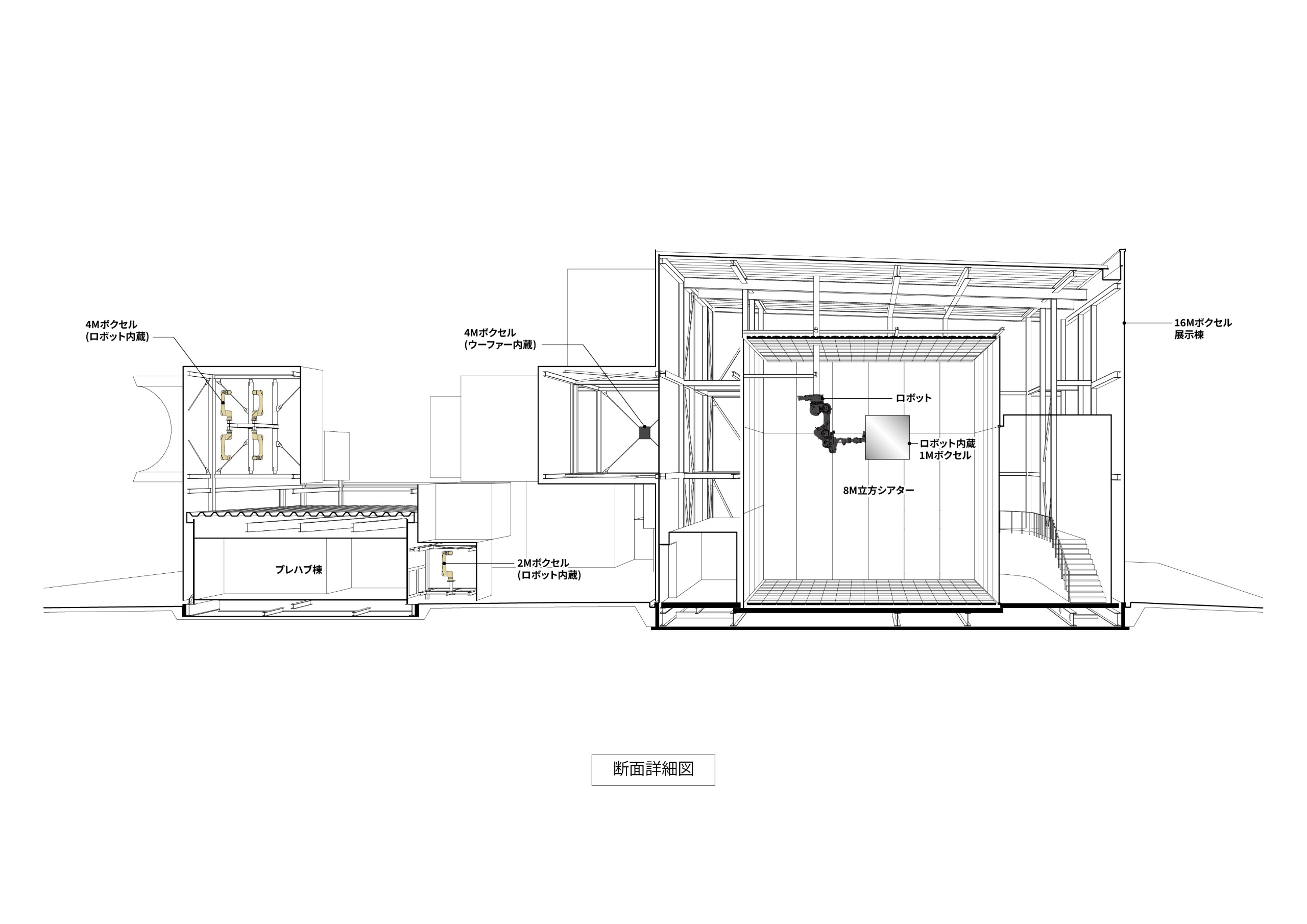
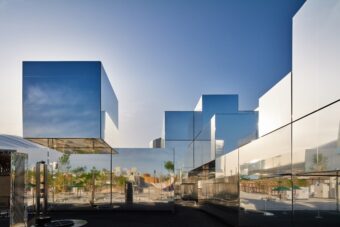
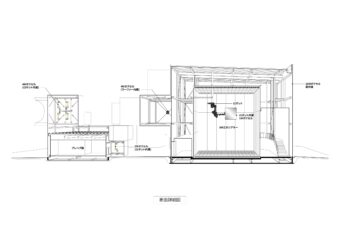
The pavilion consists of four functional areas: Exhibition hall where visitors interact with their digital twins, Back-office building, Security station, and Rest area. Each of these is encapsulated within voxel clusters of 2m, 4m, and 8m cubes. These simple and highly flexible components made from frames and membranes allow for adaptability to budget or functional changes, and they also support disassembly, relocation, and reuse after the Expo – making it a highly sustainable temporary structure.
The mirrored membrane exterior responds to wind at resonant speeds relative to the weight and size of each membrane surface, causing it to vibrate like it’s breathing and distort the sky and surroundings with a unique rhythm.
Inside several voxels, woofers and robotic arms are installed. By adjusting low-frequency vibrations and robotic movements, the membrane can be made to shift dramatically – creating a literal “null-null” (slippery, fluid) transformation. Integrating materials, properties, and dynamic motion, the pavilion aspires to become a living architectural entity, interacting with its environment and people.
As a result, the architecture of null² serves to function as an “interspace”, where countless parallel worlds intersect. Together with the interactive exhibition where visitors meet their own digital twins, the pavilion embodies Ochiai’s concept of Digital Nature and the Expo’s core theme of exploring new relationships between humans and technology – a place where the physical and virtual, humans and avatars, objects and information all intertwine.
Project Name
null²
Information
-
Year
2025
-
Category
Design Category, Building Type, Design Status, Architecture, Culture, Facade, Realized, Kinetic
-
Status
Built
-
Location
大阪, 日本 Osaka, Japan
-
Photo Credit
阿野太⼀、楠瀬友将 Daici Ano, Tomoyuki Kusunose
-
URL
大阪・関西万博2025シグネチャーパビリオン「null²」 Expo 2025 Osaka, Kansai Signature Pavilion null²
-
Collaborator
プロデューサー:落合陽一
構造設計:Arup
設備設計:フジタ
施工:フジタ‧⼤和リース特定建設⼯事共同企業体
展示内装設計・施工:乃村工藝社
膜素材開発:太陽工業
Producer: Yoichi Ochiai
Structural design: Arup
Equipment design: Fujita
Building construction: Fujita & Daiwa Lease JV
Exhibition space design / construction: NOMURA
Membrane material development: Taiyo Kogyo
Related Projects
-
![]()
Flipmata
2012
Design Category, Building Type, Design Status
-
![]()
Sonified Newron
2012
Design Category, Design Status
-
![]()
BOOK OF TONGUE
2014
Design Category, Design Status
-
![]()
“Lumière : The Enlightenment and Self-Awakening of
Taiwanese Culture” at MoNTUE “Lumière : The Enlightenment and Self-Awakening of Taiwanese Culture” at MoNTUE2021
Design Category, Design Status
-
![]()
unnamed AR
2022
Design Category, Design Status
-
![]()
Offio
2008
Design Category, Building Type, Design Status
-
![]()
Football Chair
2010
Design Category
-
![]()
“L’ouvre 9” Exhibition 2015
2015
Design Category, Design Status
-
![]()
CHINA PUBLIC SECURITY EXPO 2015 SONY
2015
Design Category, Design Status
-
![]()
Drone going out to buy a lunchbox
2015
Design Category, Design Status


View Detail
